“WHEN THE TRAVELER
GOES ALONE, HE GETS ACQUAINTED BY
HIMSELF”
The above quote is something worth trying to wrap your head and mind around.
TODAY: “It’s all in one’s attitude when it comes to traveling. That’s what my mind now says to me.”
Earlier today I visited the largest wine museum collection in the world. If you google the words you get: The Vivanco Museum of Wine Culture is a must-visit on your Rioja wine tour.
The best wine museum in the world. This place is to wine what the Getty Center is to pre-20th century European paintings, contemporary and modern sculpture. I haven’t been to the Getty but now I can say that I’ve visited the Vivanco and tasted its finest wines.

There’s six floors to go see and I just can’t include the best pictures like for example the cork and barrel making process, the plantings, picking and everything wine related in history.

TODAY: Have you ever heard of Hemingway?
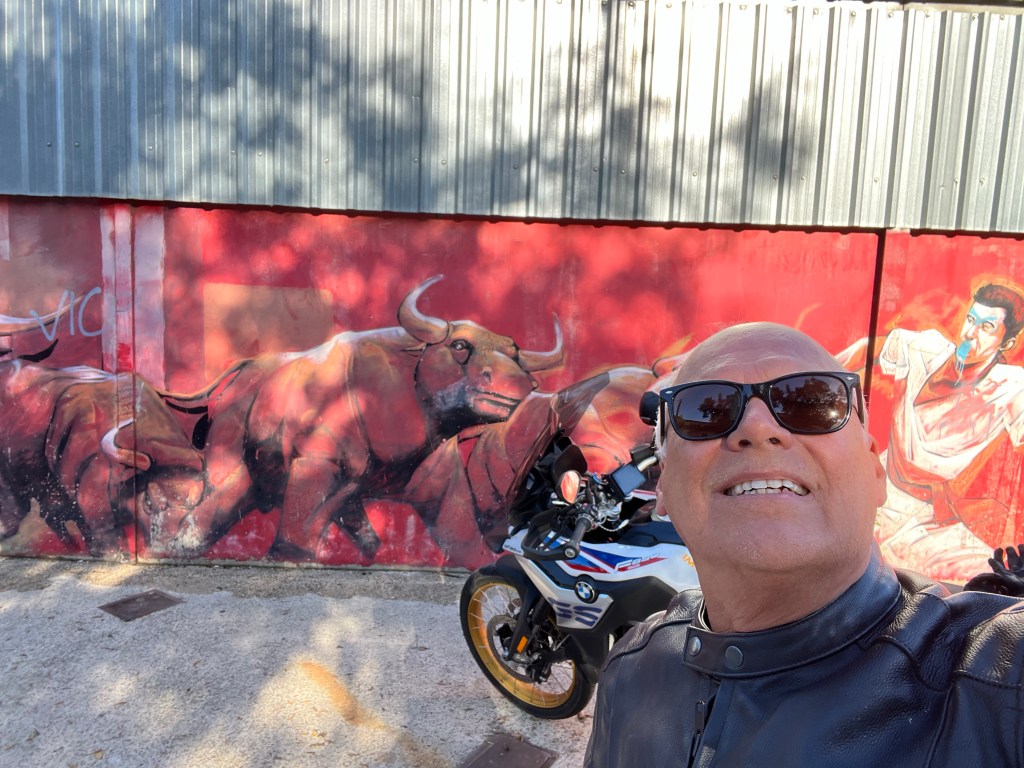
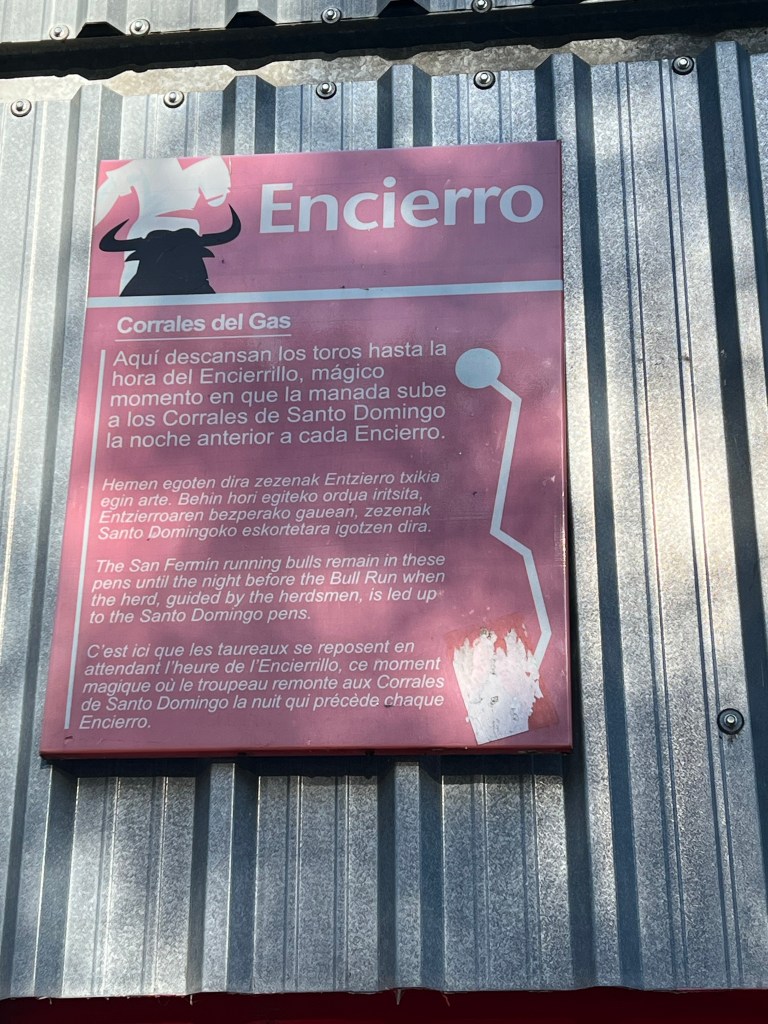
Ernest Hemingway, is a Nobel Prize-winning American writer, who first visited the Spanish city of Pamplona 100 years ago this past July. This is the city I stopped to visit this morning.
Hemingway is the first person credited with letting Americans know about these crazy Spanish and how they celebrate the feast of Saint Fermin.
The running of the bulls event started more than seven hundred years ago. For nine days, people come to the northern Spanish city for bull running, bullfighting and especially for the partying.
The festival affected Hemingway so deeply when he first visited that he returned eight times between 1924 and 1959.
The bells now toll eight times. A rocket would is lit. And the bulls would charge out of the gate behind me in the picture. At that moment, a crowd of runners wearing white clothes and red scarves start to run.
They look back, they move and dance to avoid being gored by the charging bull’s horns. Onlookers cheer them on from the safety of the fences.
In 1926, Hemingway wrote his first book, The Sun Also Rises. He wrote about his experiences in Pamplona and established himself as the voice of what became known as the “Lost Generation,” a generation of people affected deeply by events of World War I.
“I can’t stand it to think my life is going so fast and I’m not really living it,” says one character in the book.”
“Nobody ever lives their life all the way up except for the bull-fighters,” is supposedly the correct answer.
“It’s all in one’s attitude when it comes to traveling. That’s what my mind now says to me.”
If one is traveling solo, like I am now doing so, then that’s the attitude that you have to keep happy and feed.
I thought long and hard about what I wanted to accomplish today for roughly 60 seconds while moving on a motorcycle at 145 kilometers per hour. I suddenly realized that I was close to Pamplona. Somehow my crazy mind now connected itself to Hemingway and the running of the bulls. And now I just need to get there.
YESTERDAY: Today we continue to ride the Pyreenes loop in Spain. Earlier today I arrived at the (Sos del Rey at 2:00 pm) Catolico Parador with 53 km of fuel to spare. Others did the same. I got to fill up my tank before the others who got there at siesta time. The gas station was now closed.
A parador (our hotel) is a higher end lodging location that’s in a historical location and building. The Spanish government wants to keep the building and location from becoming a derelict place so, they lease it out to a hotel to manage and maintain it. Apparently there’s also great tax incentives that go along with it.
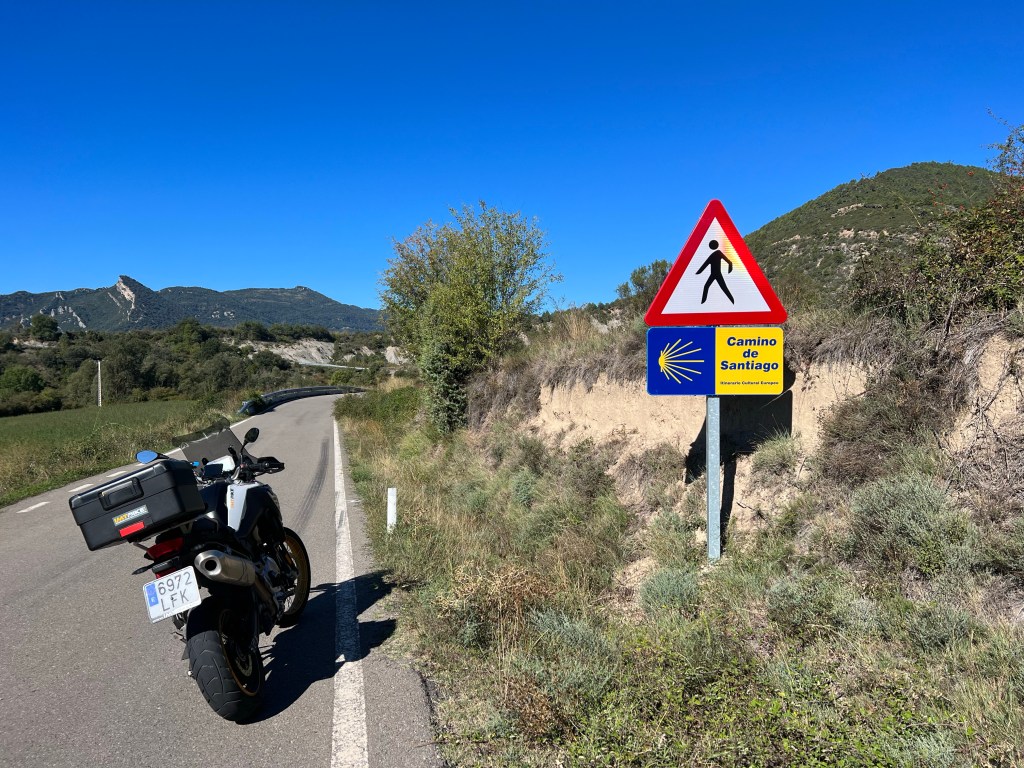
Were it not that the place is possibly operating on a skeleton crew this would be an even greater place. My shoulders ache from the handle bar to seat location. Back home I use what are called bar risers.
I was so much looking forward to the spa with the Swedish masseuse but, unfortunately they already sent her back to her home country. Kidding! My massage is scheduled for 5:00 pm today at a nearby town approximately 12 kilometers away.
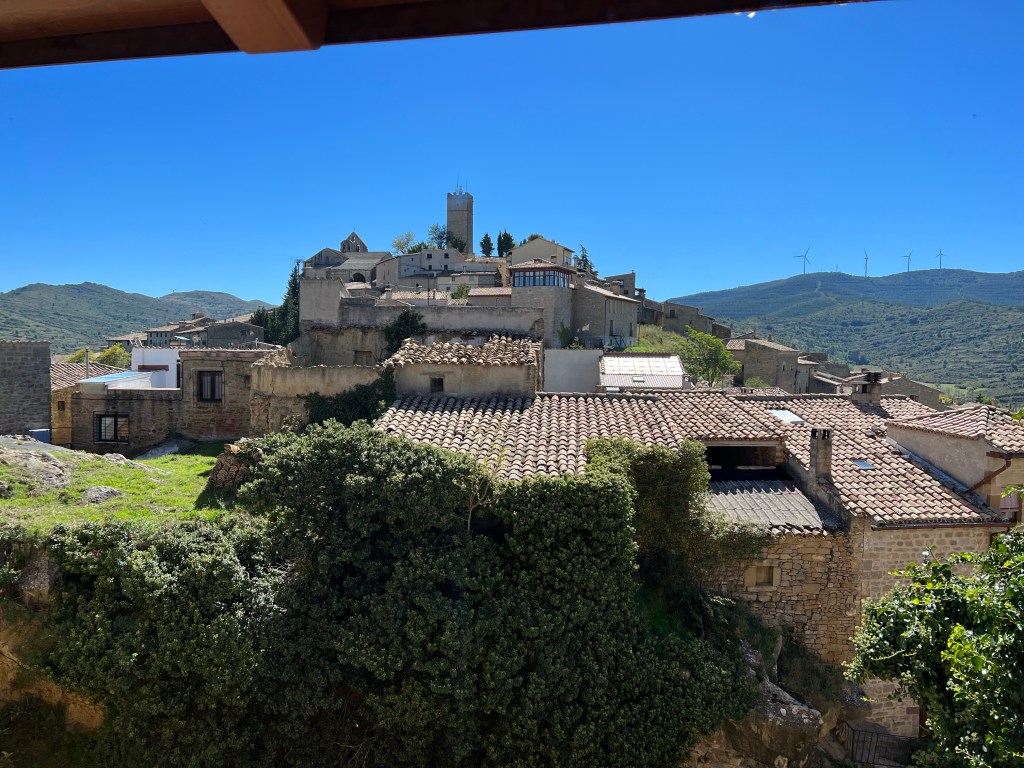
Back from the massage and my shoulders don’t hurt anymore. The spa that I went to was a cross between a chiropractor and a massage. Immediately she had me standing and evaluated my upright posture and then took several measurements. Once on the massage table that resembled a table for a patient she went to work with what smelled like tiger balm and olive oil. She only used her hands and applied several stretching techniques to my body. The technique was not at all relaxing however, maybe 45 minutes into it I could feel my neck muscles relax and make cracking sounds. My first Spaniard massage and I can definitely say that it worked. A 90 minute massage will set you back 55 euros. An English school and a bullring are both within walking distance of the Areia Salud y Bienestar.

Zaragoza is the capital city of northeastern Spain’s Aragon region. Think of Zaragon as the city and Aragon as the county.
Yesterday an 84 year old man from another town told me that the only other region in all of Spain that once had their very own kingdom was Aragon.
Spain’s largest river in volume, runs west–east across the entire region through this province. It’s also home to the highest mountains of the Pyrenees. From our current vantage point they don’t yet look that way.

On the former frontier between Aragon and Navarre, five walled towns stand out on the horizon. King Fernando was born in one of these towns.
FERNANDO II OF ARAGON – The King of Aragon married his cousin Isabel. This marriage of the prince and princess in 1469 sealed the union of the two crowns and then decided the future of Spain.
During their reign, the Castilian civil war ended and the grand expansion began.
In 1492, America was discovered and the extremely long Re-conquest ended with the defeat of the last Muslim King of Granada, Boabdil.
In 1494, Ferdinand and Isabel were named the first Catholic Monarchs by the Pope.

These two consolidated royal power and established the administrative and economic bases of what is today modern Spain.
Their foreign policy, however, had an unwanted effect as, when their only male child died, the future of the crown became linked to a foreign dynasty, the Hapsburgs, which entailed a complicated imperial destiny.
And the moral of this story is don’t ever think of marrying your cousin.
Aragón, like many of Spain’s regions, has a unique cuisine and rich gastronomic heritage. It’s mainly based on thick stews, packed with both meat and vegetables. Our parador doesn’t offer any such thing; believe me I really wanted to try a thick stew and the best french onion soup; both times I’ve failed miserably.
Some of the things you should try while you’re here also include the asparagus from the banks of the River Ebro. Don, Debbie and I did so earlier today. It’s not on my list to ever try it again.
“I always wonder why birds choose to stay in the same place when they can fly anywhere on earth. Then I ask myself the same question.” – Harun Yahya

 Trawlercat Chronicles