Good morning from the other side—literally.
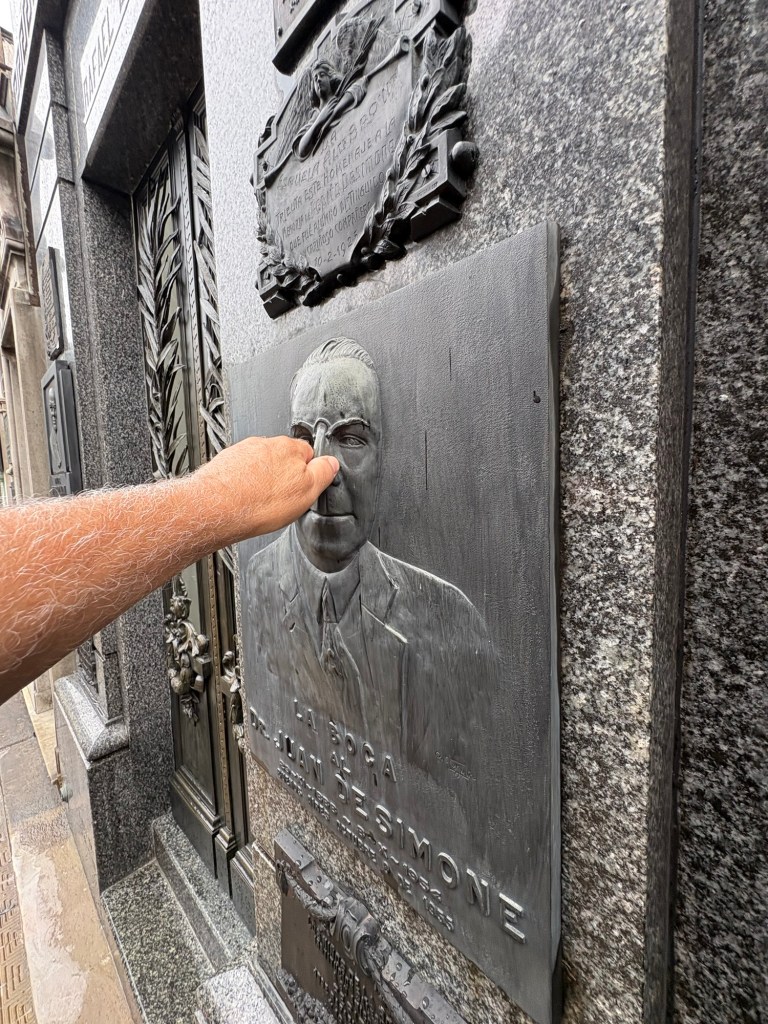
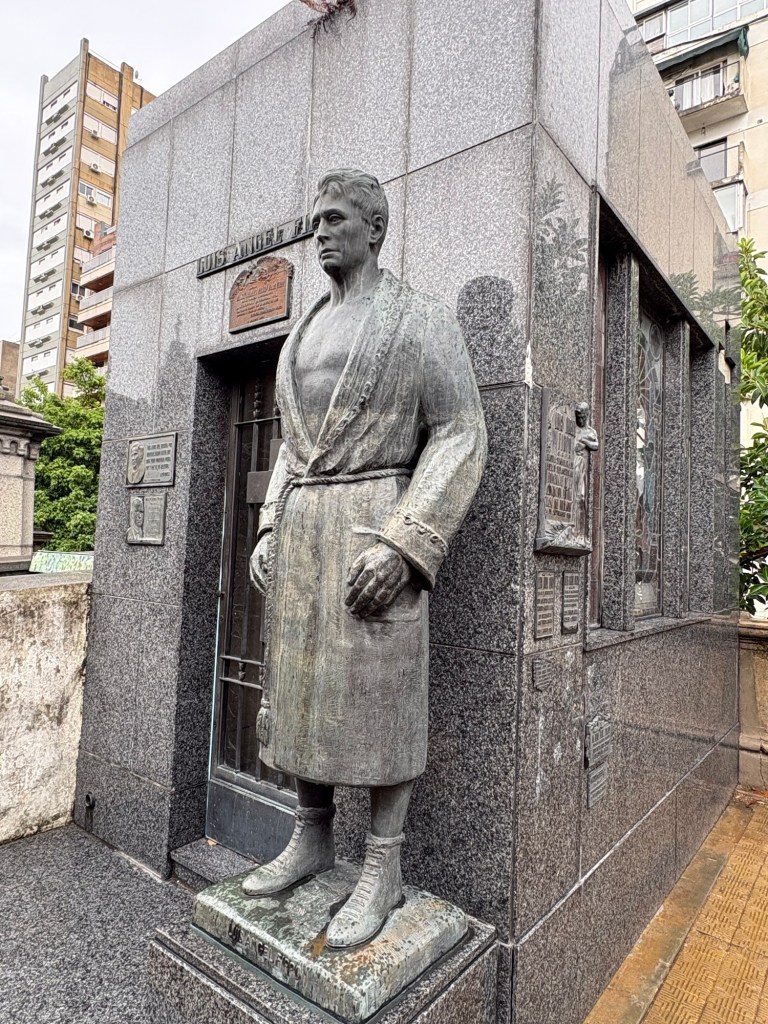
I’m standing in the heart of Cementerio de la Recoleta, Buenos Aires’ most famous “city of the dead.” This isn’t your typical graveyard with simple headstones; it’s an sprawling open-air museum of extravagance, spanning about 14 acres with nearly 5,000 above-ground vaults and mausoleums.
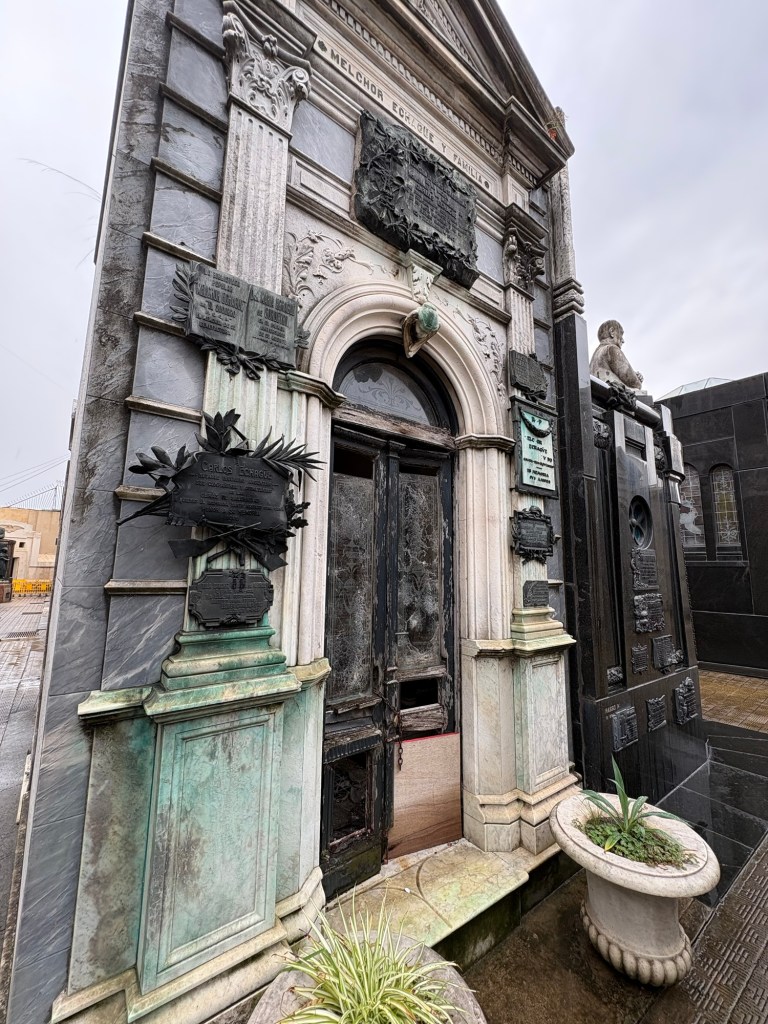
Many are towering, story-and-a-half structures—miniature cathedrals, Greek temples, or Gothic chapels—built from imported marble (mostly from Paris and Milan between 1880 and 1930) and adorned with dramatic statues in styles from Art Deco to Neo-Gothic.
It’s a place where Argentina’s elite once competed even in death, each family trying to outshine the next with ever more opulent designs. Over 90 tombs are protected as national historical monuments.
As I wander the tree-lined paths (laid out like a grid of city blocks), I pass family mausoleums etched with generations of names: one stretches from a death in February 1903 all the way to relatives in the 1960s—Alberto, Ángel, Carlos, Emilio, José, Pedro, Rafael, Víctor… an entire lineage sealed in stone. Some tombs are pristine (fresh flowers often mark the most famous ones), others neglected: broken glass, overgrown vines, fallen tree debris littering the floors inside.
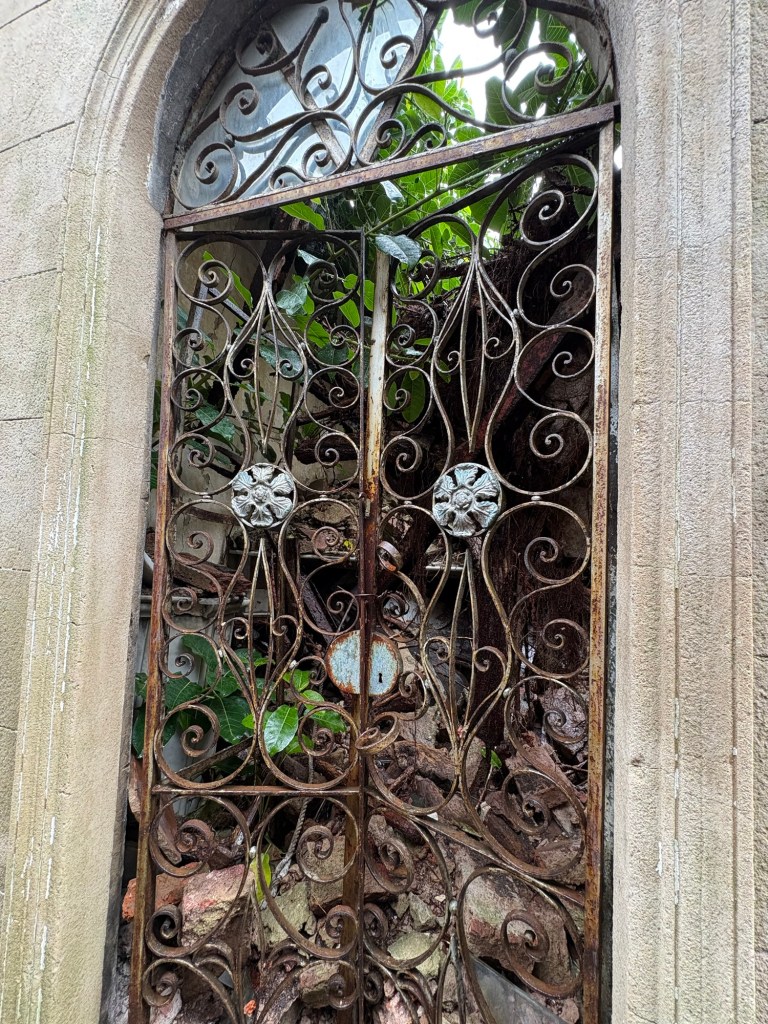
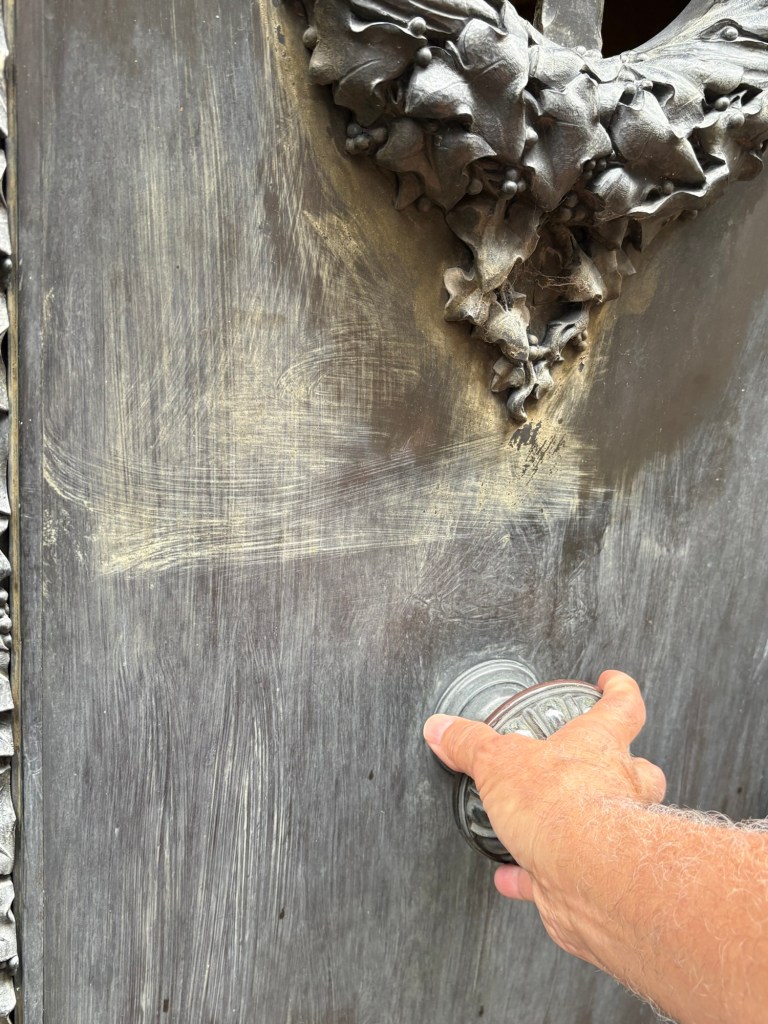
One I just peered into has a stairway descending into a basement crypt—visible right through the door—flanked by an altar, a crucifix, and handrails like a tiny abandoned chapel. The double metal doors are barely held shut with baling wire. It hasn’t been visited in decades, maybe since the 1970s for some. Tempting to imagine what’s down those stairs… but no, I’ll leave the dead in peace. No curses today.
Of course, the star here is the Duarte family mausoleum, where Eva Perón (Evita) rests—her body fortified five meters underground after a long, tumultuous journey post-1952 death. It’s one of the most visited, often piled with roses and tributes, a stark contrast to the forgotten ones nearby.
This is technically a self-guided tour (though the cemetery draws crowds—YouTube is full of videos about it). I paid over 5,000 pesos for entry earlier this morning—pretty standard for tourists here.
My day started with checking out of my volunteer teaching lodging and moving to a solid hotel in Recoleta called the Vilon.
Right across the street, breakfast: the biggest, flakiest croissant I’ve ever had, topped with fresh fruit, paired with an Americano that arrived in a tiny thimble-sized cup but packed a serious punch. Fully caffeinated, I walked about 16 minutes through light sprinkles (it rained harder earlier) to get here.
The place feels almost empty now, probably thanks to the weather, though I can spot other tour groups in the distance near the chapel and perimeter walls. The sun’s just starting to poke through the clouds—rain should clear soon.
I’ve got about five hours to kill before my room is ready. After two weeks of non-stop volunteering, fantastic asado (Argentine beef is on another level—tender, flavorful, and somehow doesn’t leave you wrecked the next day like back home; my gut’s actually feeling better than it has in years), and a few so-so tours, I’m finally in pure tourism mode.
The graffiti tour was a highlight—really captured the city’s edge—but others were duds. Tomorrow’s a paid boat tour I booked; fingers crossed it’s better.
Wandering these paths naturally got me thinking deeper about death itself—what it really is. Most of us don’t ask out loud until life forces the question: late at night, in a hospital, or after losing someone close.
Medically, in 2026, it’s straightforward: the irreversible cessation of integrated organism function—either permanent stop of heart and breathing, or total, irreversible brain death (including the brainstem). That’s the clinical line used to declare someone gone, to turn off machines.
But the rawer questions linger: When is the “me” I recognize truly gone forever? After the last heartbeat or flat EEG, is anyone still “home”? Does anything continue—somewhere, somehow?
Neuroscience says that our sense of self emerges from precise, integrated brain patterns across the cortex, the thalamus, and more.
When those collapse irreversibly, the substrate for a first-person perspective vanishes—no more, nada and absolutely no evidence that it re-emerges elsewhere. Sorry to say that to the believers of the faith.
But then, do we really know all the answers about death?
Physics adds: death is when that final fight ends. From the inside, there’s no “nothingness” to experience—because there’s no inside left.
Experientially means: In a way that is based on, derived from, or relating to personal experience.
The permanent end of there being an “inside” at all.
Everything beyond—reunion, reincarnation, lights-out forever—stays in faith, speculation, hope, or fear.
None proven, and none disproven.
Standing here amongst these grand monuments to legacy and these quiet, abandoned vaults, it hits harder: what lasts? Names on stone? Memories? Or nothing at all?
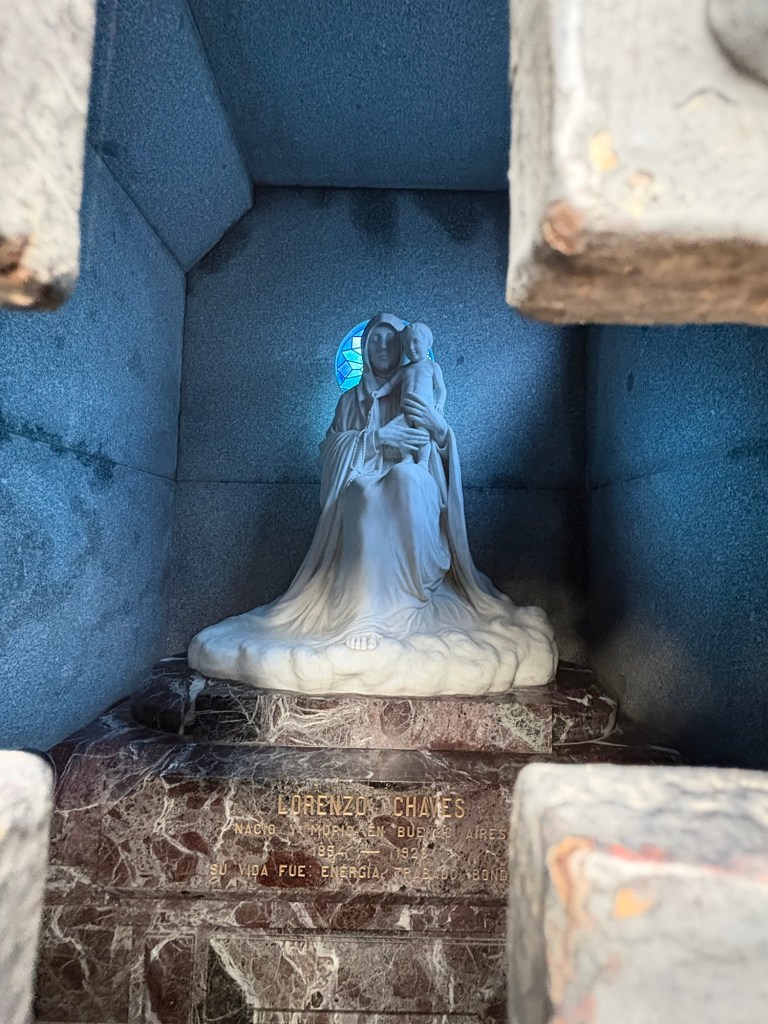
It makes the days that you and I have left living feel more urgent.
Right now I’m feeling energized, entertained, and oddly reflective among all of this grandeur and decay.
Some tombs are fully abandoned—whole family lines extinct, or descendants scattered and uninterested in upkeep. It makes you think about your own legacy, like for example what lasts, and what just simply fades away.
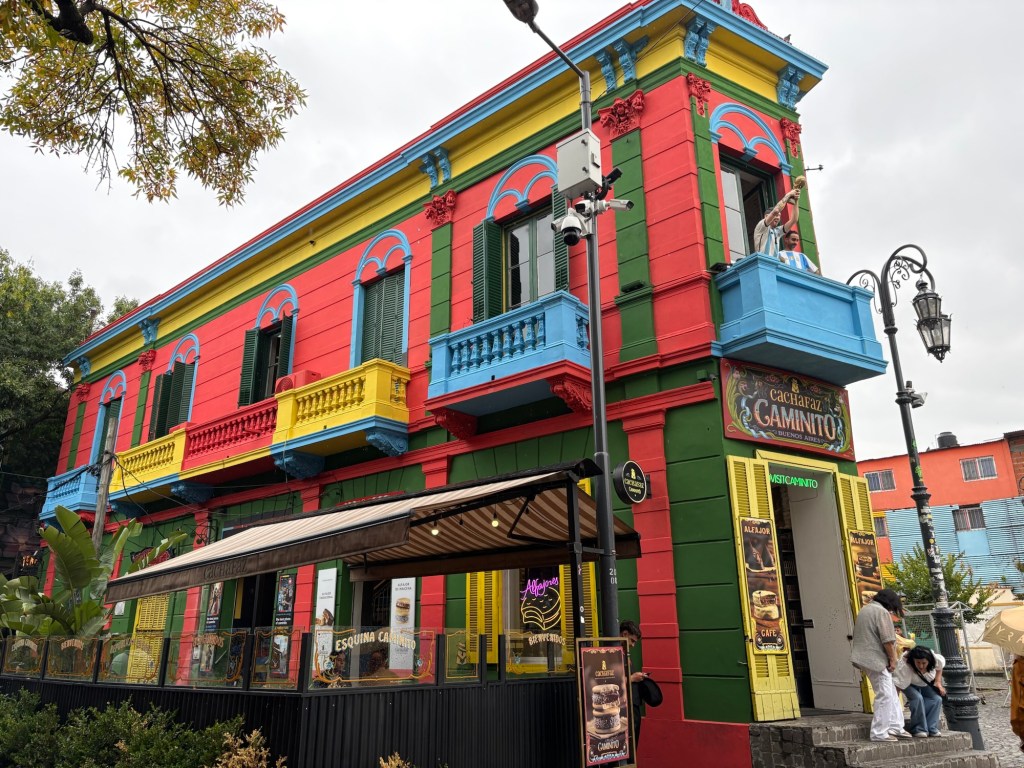
A quick shift: later now, and I’ve jumped neighborhoods via Uber to La Boca. Planned a standard Boca tour but ditched it for a solo wander. Ended up at a small, intimate outdoor tango spot—tablecloths, a little roof, maybe three feet from the dancers. Just tipped the performers 20,000 pesos (about $14 USD at current rates—ARS is hovering around 1,390-1,400 to the dollar these days) because it was only me, the waiter, and them; they seemed to appreciate the boost. The female dancer’s hand bears that telltale tango imprint from years of grip and spin—raw dedication.
Sipping a beer, waiting on what I think is stuffed chicken. The music’s live, the moves passionate and close. La Boca’s colorful, gritty vibe is the perfect contrast to Recoleta’s polished solemnity—life pulsing right in front of me after pondering its end.
Argentina keeps surprising me. Two very different slices of life in one day—death’s monuments and life’s dance. Feeling good, foot’s holding up okay in my Merrells (plantar fasciitis flared yesterday after soccer with the kids on astroturf, but it’s manageable today—no major pain yet).
What’s on your mind while I’m out here soaking it all in?
Ralph 3/2/2026 Buenos Aires
And you run and you run to catch up with the sun but it’s sinking
Racing around to come up behind you again
The sun is the same in a relative way but you’re older
Shorter of breath
And one day closer to death
“Time “ by Pink Floyd.

 Trawlercat Chronicles