Good morning from Buenos Aires.
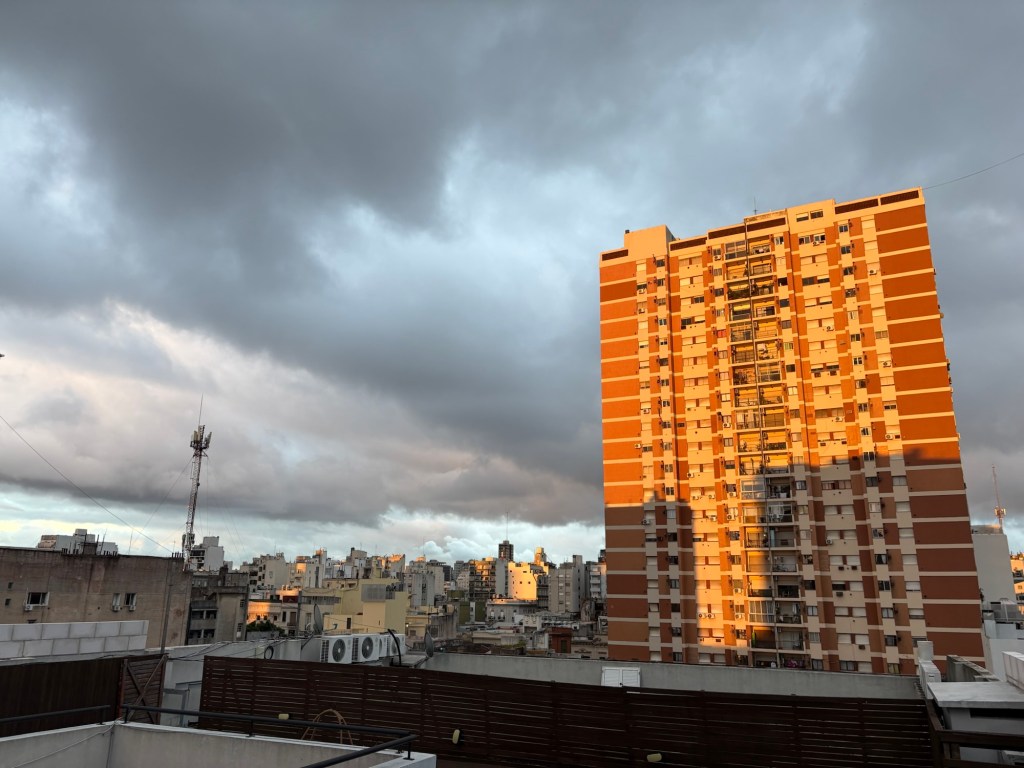
Woke to thick clouds that promised rain, though the app insisted otherwise. Sunrise eventually broke through, throwing long, soft shadows across the high buildings—perfect light if you had a camera ready.
I laid out yesterday’s pastries on the upstairs communal dining table where the group meets for breakfast. Last night’s remnants were still there—empty vodka bottles, a few mixers, no one had tidied up.
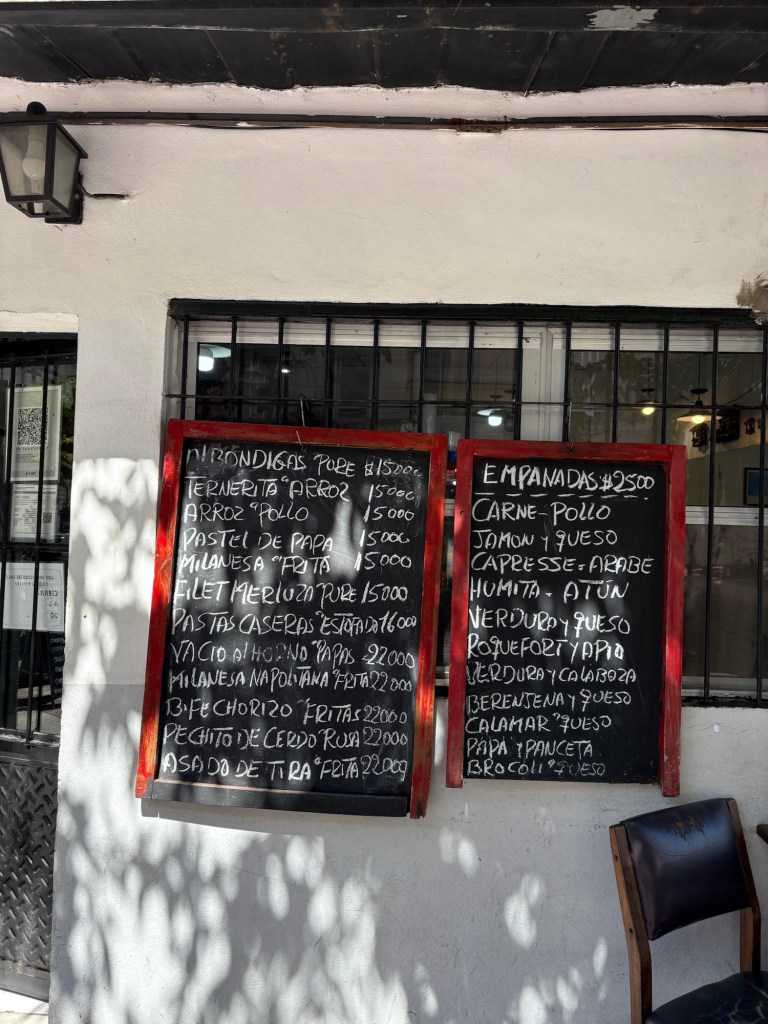
At 7:30 I was the only person up; fridge and cutlery locked, no coffee possible. Ate a pastry and weighed whether to walk for one. Decided on a strong yes. Lately coffee hasn’t been anything to brag about but, that all changed this morning.
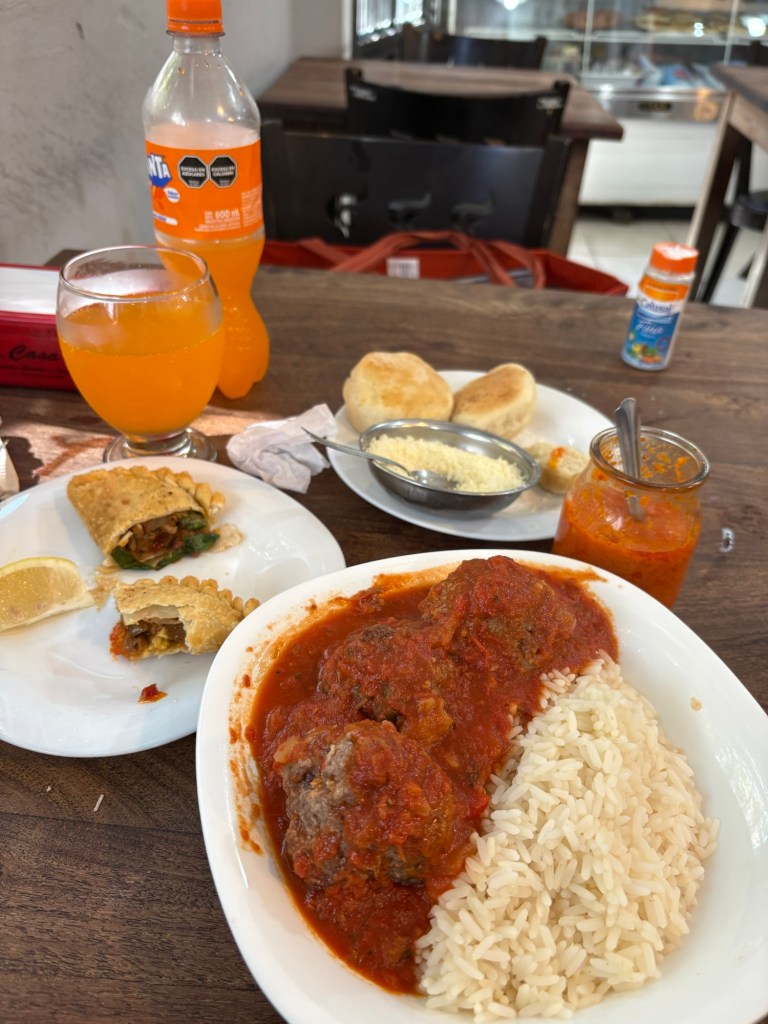
The café felt like a local Cheers—warm hello the second I stepped in. First customer. Café con leche, croissant, and a small complimentary shot that tasted like a brighter, slightly different orange juice. Delicious either way. Total: 5,950 pesos, roughly $4.30 USD. Not street-mate cheap, but far from tourist gouging.
On the walk back I realized—four days in—I had finally memorized the six-digit code to get into my room. Small victory after fumbling it every time before.
Yesterday’s classes had their highlights. Numbers 1–10 brought the predictable giggle when we hit six and seven; the boys did the hand gesture thing—palms up, alternately raising and lowering them like weighing two options—and started chanting “six seven” (not sixty-seven).
It’s a viral meme among kids right now, sparked by a rap song (“Doot Doot (6 7)” by Skrilla) and boosted by basketball clips (like LaMelo Ball at 6’7”), but it really has no fixed meaning—just silly nonsense that’s fun because adults don’t get it, and the gesture makes it even more absurd. Some teachers skip those numbers now because the reaction is instant chaos.
Today we started for school at 8:30. Quick stop for water—2,000 pesos a large bottle. German guy paid by card; 22 pesos extra versus cash. Barely noticeable, but we clocked it.
Bus was efficient—own lane, professional driver. Ours turned out to be the premium version (1,400 pesos more, about $0.93 USD extra). He suggested waiting; we did. Five minutes later the regular one arrived. Everyone laughed about it.
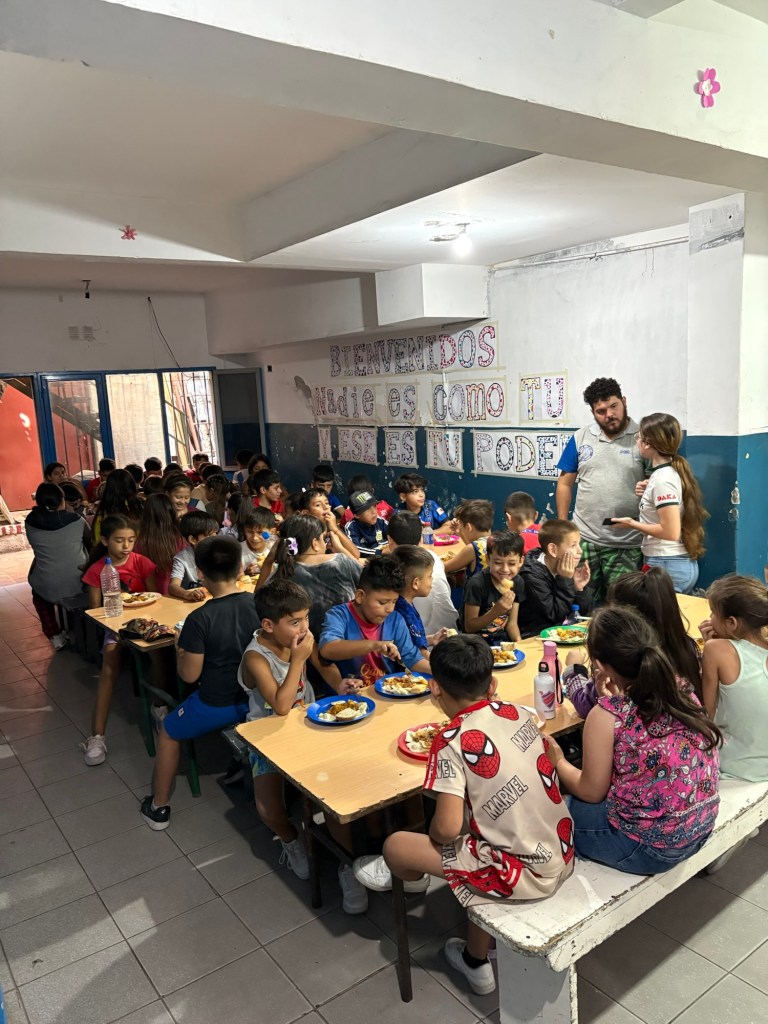
At the project we split the kids: one half watched a 40-minute animated English video on greetings and travel (pre-downloaded, JBL speaker, phone in airplane mode).
The songs had the girls singing full volume—teacher joined in, clearly enjoying it. Other half did animal bingo; boys and girls pretty much separated themselves without any prompting from us. We don’t separate them—they just seem to do that naturally. Rarely see them mixing together in the classroom, at least during these activities.
I just realized I really don’t know the kids names. I might have to change that tomorrow.
Switched groups, then out to the soccer field—or rather, the open space in front of the classroom. The little girl who’d been yawning nonstop (Leo says she’s always tired) and seemed especially shy, hanging back and barely engaging, spotted one of our soccer balls—a small size 3, the kind perfect for young kids her age.
She picked it up quietly and started gently tapping it around. When it rolled up toward me, I moved it soccer-style with a soft touch, then kicked it lightly back to her. She paused, then sent it back—tentative at first, eyes down.
Before long we were in a full back-and-forth game, her passes getting firmer, her feet finding the ball more confidently, little smiles breaking through as she tried to trap it or aim better.
You could see her coming out of her shell, like she was quietly proving to herself (and maybe to me) that she had some real spark. We kept it going probably 10 minutes or more, right there in front of the classroom, and no one paid much attention—the other kids and volunteers were completely wrapped up in the video and bingo at their two tables inside.
When I asked her age, her reply was too soft (or too quick) for me to catch, even after a few attempts. I started showing fingers—five, then six, seven—until we somehow agreed on five. Turns out she really is five. That small, lightweight ball suited her perfectly: easy to kick, easy to chase, and just right for a little five-year-old’s energy.
Buses back were quick. Teaching wrapped by noon; breakfast on our own, afternoons free.
After getting back mid-afternoon following lunch—when I usually take a small siesta—I put together a short two-minute video from the day’s clips: bits of teaching, the kids playing fútbol, the general rhythm of it. Shared it with the group; it turned out surprisingly well. I keep the kids privacy in mine so the only videos that I share I’ve been sharing them with the teaching staff and other volunteers.
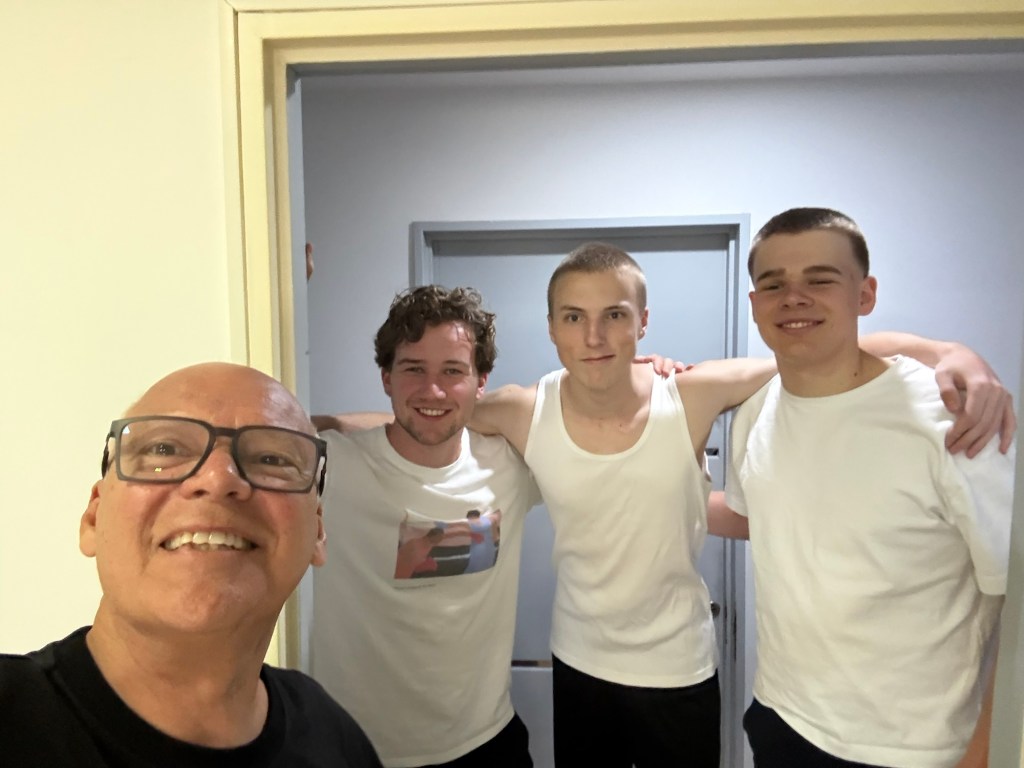
The afternoon had settled into that soft, golden Buenos Aires glow when my doorbell rang, a welcome interruption to the quiet. I opened the door and there they stood—the three guys from Germany I’d taken to lunch earlier in the week, looking relaxed and a little proud of themselves, each with that calm, straightforward energy Germans often carry. In their hands was a bottle of Malbec, one of those serious Argentine reds with a label that promised depth and character—Mendoza fruit, high-altitude elegance, the real deal.
They’d brought it as a simple thank-you for that lunch we’d shared days earlier. No fuss, no big speech—just the bottle, handed over with quiet smiles and a few words about how much they’d enjoyed the meal. Coming from Germans, who tend to value precision and sincerity over showiness, the gesture felt especially classy and genuine. In a city famous for its warmth and expressiveness, this understated act of appreciation stood out even more. Definitely a first-class move.
Tomorrow (Thursday, March 12) should finish by lunchtime too. Afternoon open. I’m hoping to catch a tango show while I’m here—maybe Friday or over the weekend. Alejandro, the director, invited me to a barbecue soon; looking forward to that. Also considering a bicycle tour—haven’t booked yet.
Plenty of places marked on the map, but time will decide what actually happens. Good problem to have.
One passing note: Argentine women are generally striking, but the ones wearing pearl earrings seem to carry an extra layer of elegance. Haven’t seen an exception yet. For some reason I had it in my head that Argentina led the world in beauty pageants, maybe topping Miss Universe wins or something like that—I even looked it up to check. Turns out I was off; the U.S. has the most at nine, Venezuela seven, Puerto Rico five, Mexico and the Philippines four each. Argentina’s only had one winner back in 1962 (Norma Nolan). But that doesn’t change the day-to-day reality here. As you walk the streets of Buenos Aires, from time to time you spot someone who stops you in your tracks—really beautiful, effortlessly so, with that mix of European features and Latin warmth. It’s not about crowns; it’s just noticeable, and frequent enough to make you smile.
Until next time.
Ralph 3/2026

 Trawlercat Chronicles