Two Years Ago Today: January 25, 2024
Veracruz, Mexico – on the Malecón
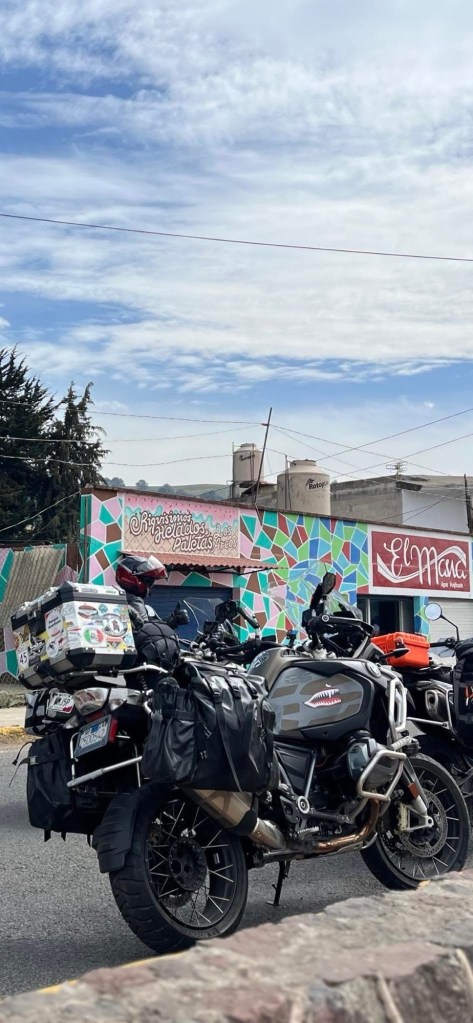
This morning, my friend Dale and I rolled our motorcycles out of the charming little town of Tecolotlán (which fittingly means “place of owls”) in Jalisco. After two tough but rewarding days on the road, we both felt a quiet sense of earned karma with the Mexican spirits—permission granted to keep riding.
Our “little dragon” and “little bear” back home had been sending those persistent “when are you coming home?” vibes, which definitely tipped the scales.
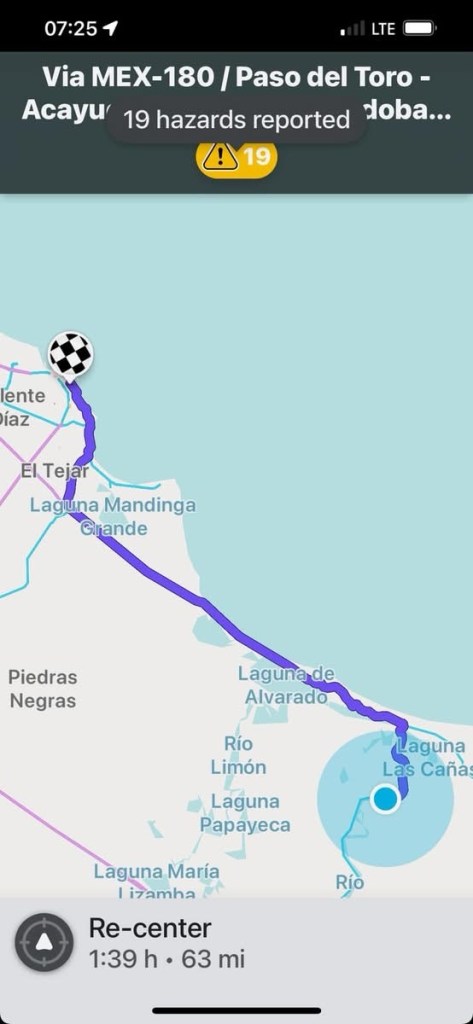
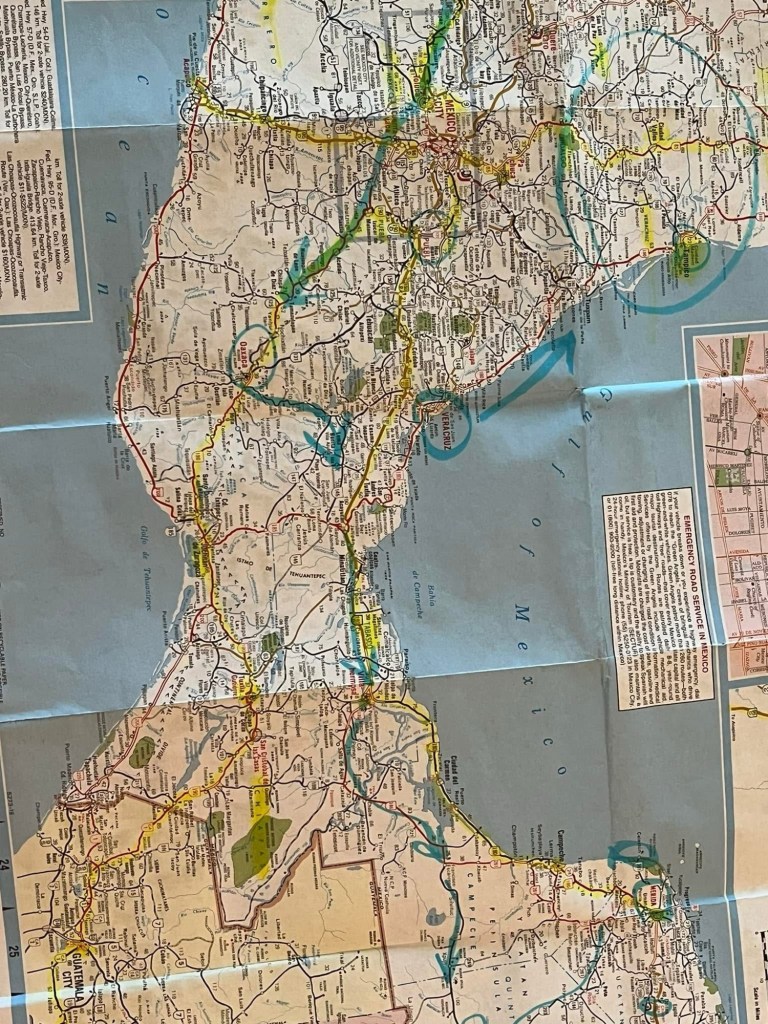
We scrapped the long push to the Yucatán and pointed toward Veracruz instead.
We did our small part to boost the local economy. First stop: coffee at Patti’s place, the only spot open early. The heavyset, grandmotherly woman behind the counter shared that she earns just 120 pesos for nearly twelve hours of work. “There are no jobs around here,” she said, “so the owners take advantage.”
The owner, a young maestra (teacher), had our instant sympathy—and the coffee was excellent. Dinner, though? Not so much. The shrimp Alfredo didn’t sit well with either of us.
Later, Juan the fisherman took us on a peaceful riverboat cruise upriver for 200 pesos each. We were his only passengers that day. The tour showed off elegant colonial homes lining the banks, many with boats still moored from the 1940s drifting lazily in the water. It felt straight out of The African Queen—Humphrey Bogart at the helm, Katharine Hepburn urging him onward—minus the drama, just gentle current and morning mist cloaking the far shore. Water hyacinths floated everywhere, and birds perched unafraid, easy to photograph against the soft hum of Juan’s outboard.
Yesterday, the town buzzed with preparations for the upcoming Carnaval-like festival starting February 2—complete with running of the bulls and locals on horseback. Government inspectors in bright green vests (emblazoned with official logos) and big lanyards swarmed businesses, ticking off lengthy checklists.
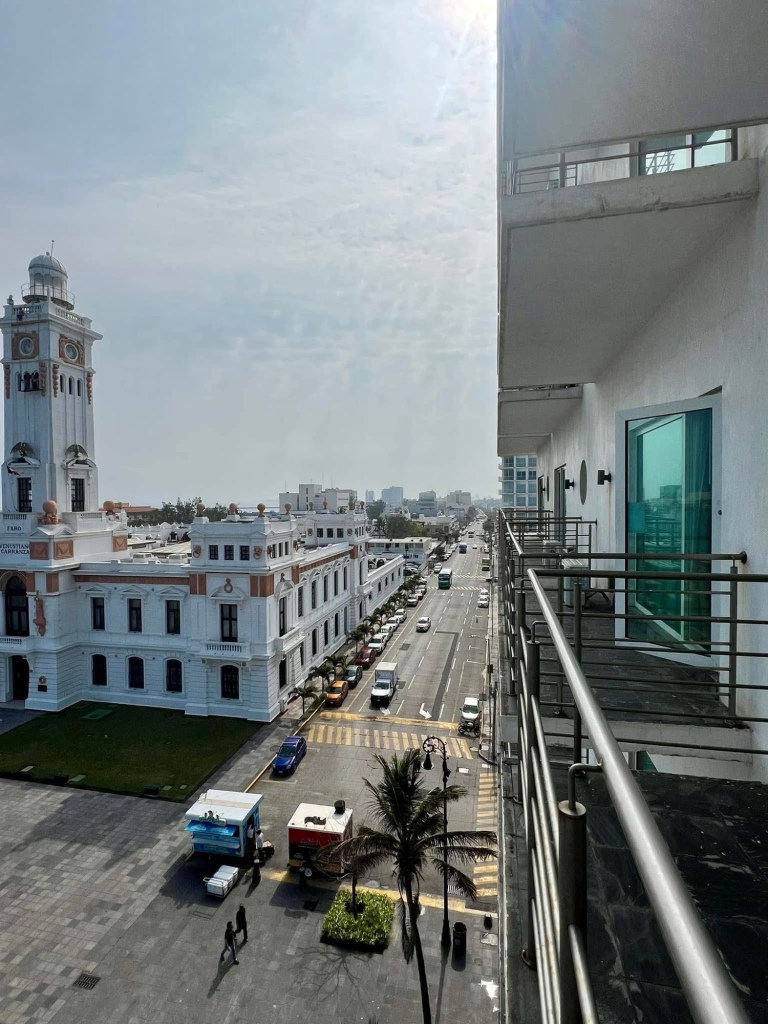
Today we arrived in Veracruz, and it immediately struck us as Mexico’s version of Miami Beach—lively, breezy, and surprisingly polished. If you Google the area, crime warnings pop up everywhere, but we’ve felt completely safe. Our high-end hotel (ocean-view room for about $57 USD each) is packed with four separate trade-show groups. From my bed, I watch massive ships tethered to tugboats gliding toward the breakwater. Red navigation lights blink atop the seawall, and just 600 feet away stands the distinctive colonial Faro lighthouse. Across the river looms the old fort—built after Sir Francis Drake’s earlier raids but forever linked to a more infamous sack.
That brings me to a bit of history: On May 17–18, 1683, the Dutch pirate Laurens de Graaf (aka Lorencillo), along with Michel de Grammont and Nicholas van Hoorn, led about 1,400 buccaneers in 13 ships to storm “impregnable” Veracruz.
They timed it perfectly—just before the arrival of the annual plate fleet (also called the Spanish treasure fleet or Flota de Indias). This was the heavily guarded convoy system the Spanish Empire ran for centuries (roughly 1566–1790) to shuttle immense wealth from the Americas back to Spain—especially silver (plata in Spanish, hence “plate” for silver coins, bars, and ingots), along with gold, gems, and other treasures mined or gathered in places like Mexico and Peru.
Ships loaded up in ports like Veracruz, met in Havana, then sailed home in armed groups to fend off pirates and rival navies.
The Spanish defenders had grown complacent; it had been over a century since any serious threat. When the pirates hit Pólvora Bastion (right across from where I’m sitting now), only 2 of 11 outdated cannons even worked—and they lacked powder and gear.
The garrison surrendered quickly. The haul was staggering: 800,000 pesos in specie, 400,000 in wrought silver, 200,000 in gold chains, jewels, and pearls, plus vast stores and 1,500 Black and mulatto captives later sold into slavery.
The city suffered immense destruction—300 dead—and Spain’s aura of invincibility in the Americas shattered. (Thanks, France, for those pirates!)
To add insult to injury, the buccaneers sailed off triumphantly as the undefended plate fleet—laden with even more silver from the mines—finally arrived, with the Spanish offering no resistance. A classic lightning raid that exposed every vulnerability.
Veracruz has stood on this site since 1599 (city status in 1615), serving as colonial Mexico’s chief link to Spain. It grew prosperous and became the most “Spanish” of Mexican cities, infused with Caribbean creole flair.
And yes, I’m fascinated by the Mexican-American War of 1846–48. (Dale joked, “Which one?” but there’s really only the one major conflict—though border skirmishes preceded it.)
Disease, hunger, and thirst claimed far more American lives than combat—over 13,000 soldiers in total. More on that chapter next.
For now, the Malecón breeze feels perfect. Safe travels, everyone—Mexico continues to surprise and welcome us.
Ralph
1/25/2024

 Trawlercat Chronicles