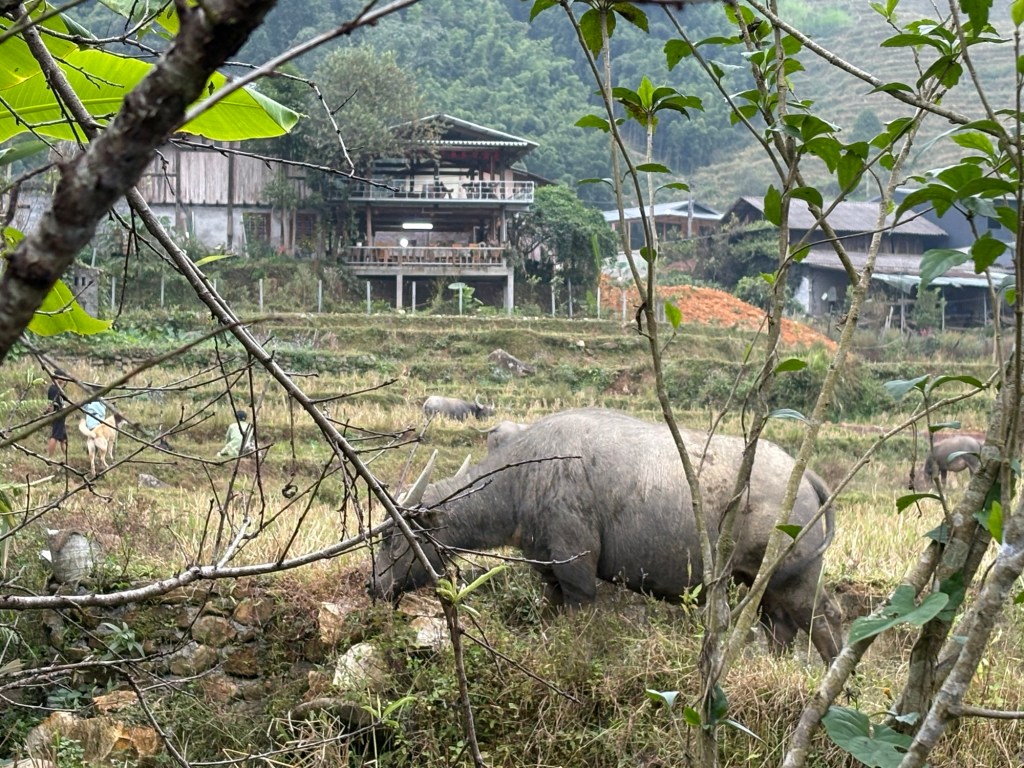
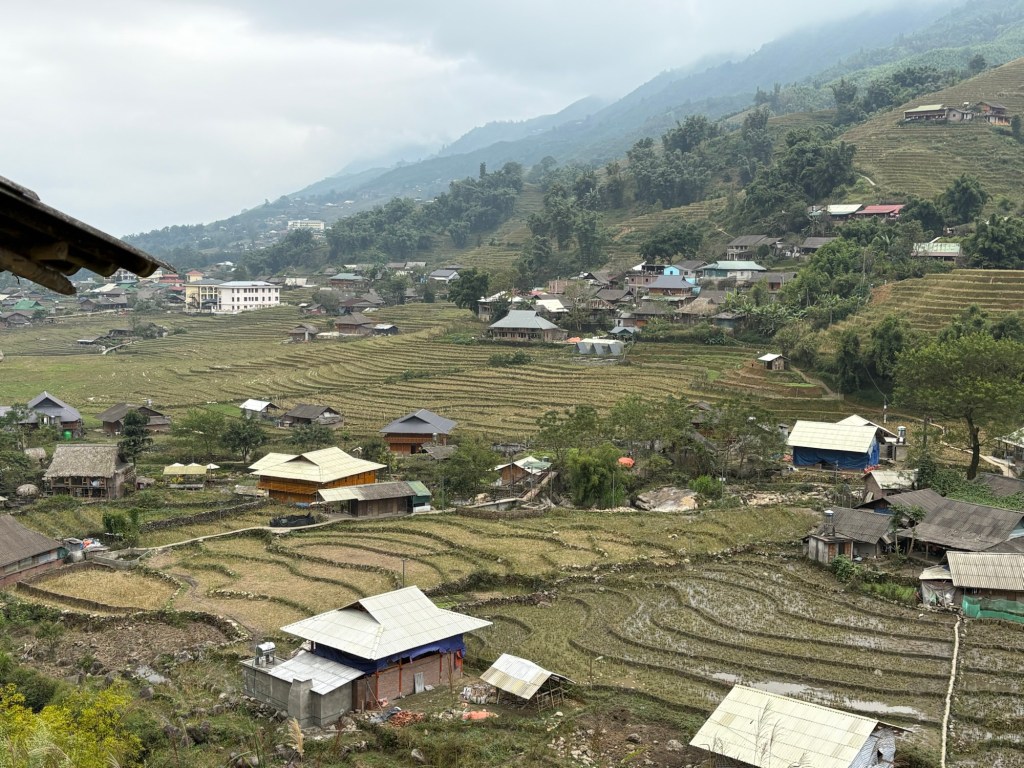
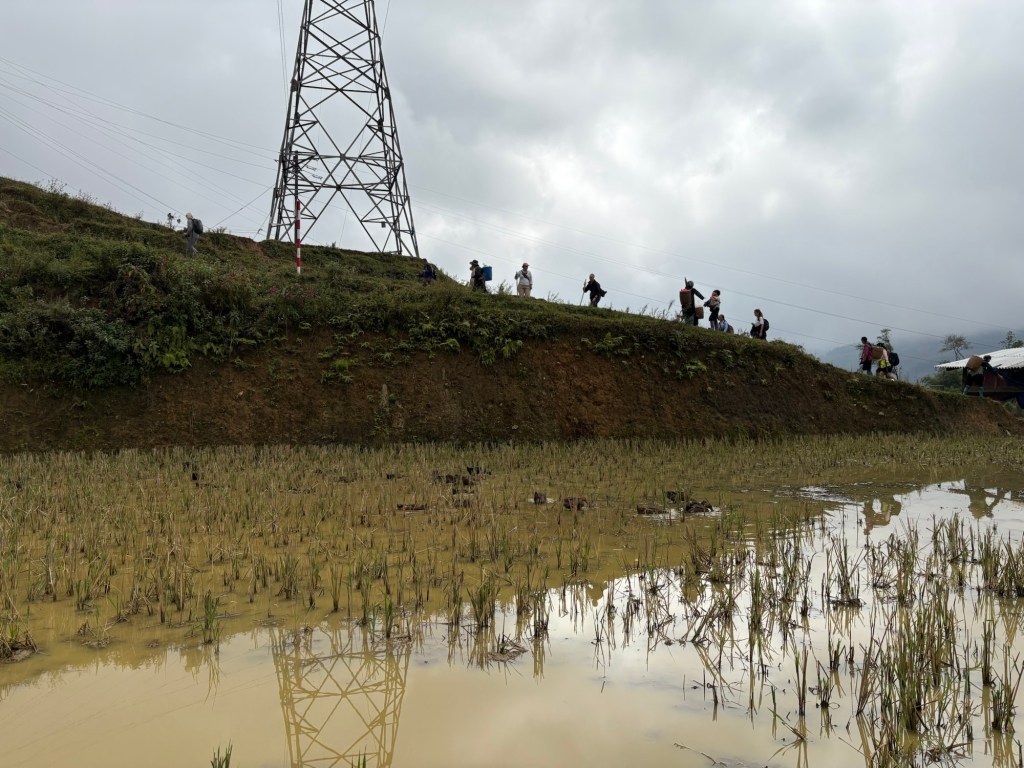
I made it to Lao Chai after a 10 km slog with a party of about ten people down from Sapa led by our guide Su. This cluster of Black H’mong hamlets hugs the Muong Hoa Valley—locally called the Golden Stream—six to twelve kilometers southeast of town.
My calves held up, but my left knee’s now grumbling. The single-track descent was all red-mud slickness and steep drops; a walking stick wasn’t optional. Halfway down, a local porter heard my muttering, found a rough chunk of bamboo, and handed it over. It saved me from more than one face-plant—she uses the same stick to poke holes for rice seedlings.
I turned the trail into a personal mud-skating rink while locals in proper boots strolled the hand-carved terrace steps like it was a Sunday path. Weaving up and down those ancient stairs was the real highlight—worth every near-miss.
We’re tucked at the base of the Hoang Lien Son range. In November, clouds hang low and the big mountain views stay hidden.
I’d booked a homestay that sounded perfect: simple stilt house among the terraces, bamboo and rattan touches, ethnic textiles, private bath, Wi-Fi, garden outlook—all for $10–20 a night, plus home-cooked meals and optional treks. Figured it’d be the low-key, real-deal escape from Sapa’s polished tourist joints, with actual time among the Black H’mong families who run the place.
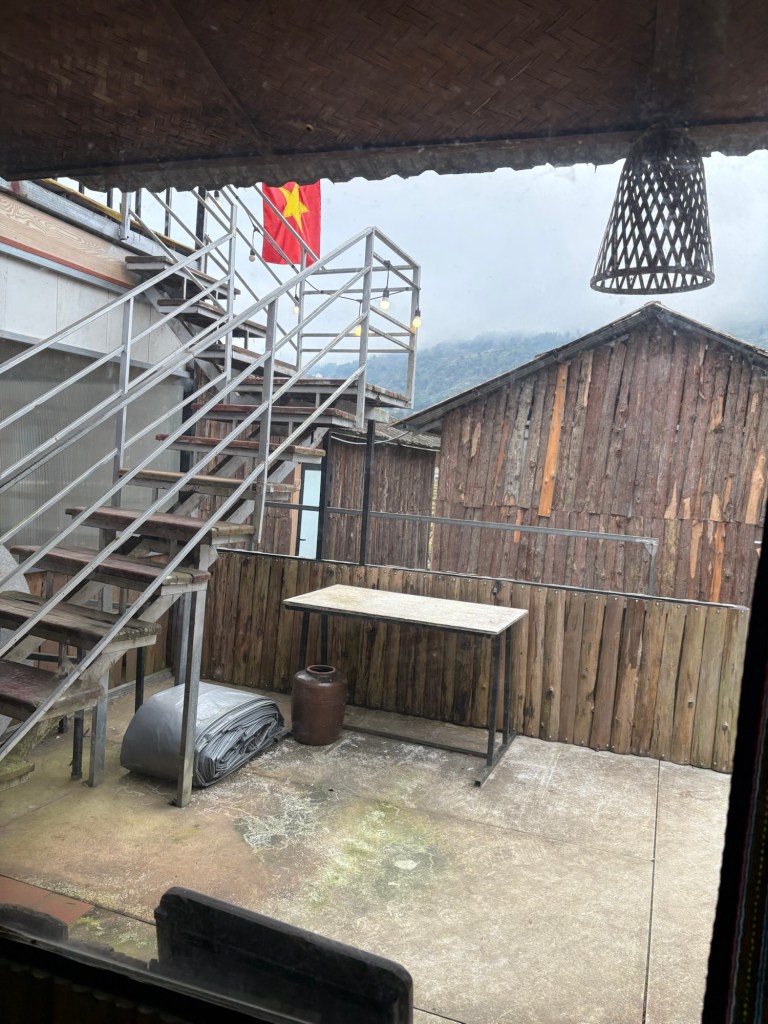
Reality check: my hut was more leftover hotel panels than bamboo dream. The mattress felt like a sidewalk slab, but the blankets were thick enough for the hoodie-worthy chill. One bare bulb behind a plastic shade, a fan pushing either cooking smoke or mosquito-coil haze (hard to tell), and a mosquito net tied in knots like an afterthought.
My spot faced a ladder and half a terrace—no postcard rice-paddy view. Those are reserved for the front units.
The bathroom did have hot water and a proper shower, though soap was missing. I made do with a tiny squeeze of toothpaste left on the counter.
It’s basic, it’s theirs, and it’s warm in its own way—but you can probably do better.
Dinner was decent: free-range chicken in sauce, veg, pork, rice. It always arrived cold by the time it hit the table. Shared the space with two nice younger couples—one Swiss, one Spanish. I tried to break the ice and ended up carrying the conversation. Ended by tossing out an open invite to our place in Southern California if they’re ever stateside. We’re near citrus groves in the Inland Empire, Temecula vineyards, Palm Springs deserts, and beaches are just an hour away. L.A. and Hollywood are close enough too.
Locals are either quiet or on full-blast phone calls. Earlier, I’d settled into the common area with my Kindle (Woodward’s War), when a woman parked herself two feet away for a loud, lengthy chat. Zero acknowledgment of the paying guest.
Most visitors do the quick Sapa loop: two hotel nights, one homestay, van ride back. I’m extending—heading out on the 9th via sleeper bus to Hanoi, crashing at the Tirant Hotel, then meeting my guide at 0800 to pick up nine Honda CRF300s with friends for the next leg.
Nighttime got rowdy. Big speakers rolled in for karaoke, fueled by a boisterous group—some loud Aussies I could’ve done without. Music thumped until 11 or midnight. They’d passed around tiny shots of “Happy Tea” earlier—mild, marijuana-based, meant to chill you out. Might’ve helped if the singing hadn’t drowned it. Earbuds and my own playlist got me through; eventually nodded off on the rock-hard bed.
Timing tip: September–October for golden harvest terraces; March–May for neon-green flooded paddies. Pack layers and rain gear either way—Sapa weather flips fast. Trekking sweet spot is March–May or September–November.
Bottom line: I wouldn’t book this exact spot again. Do your research—demand photos of the actual room and view.


 Trawlercat Chronicles