

Trawlercat Chronicles: Baja’s Wild Ride and a Seasoned Soul
September 24, 2021/2?
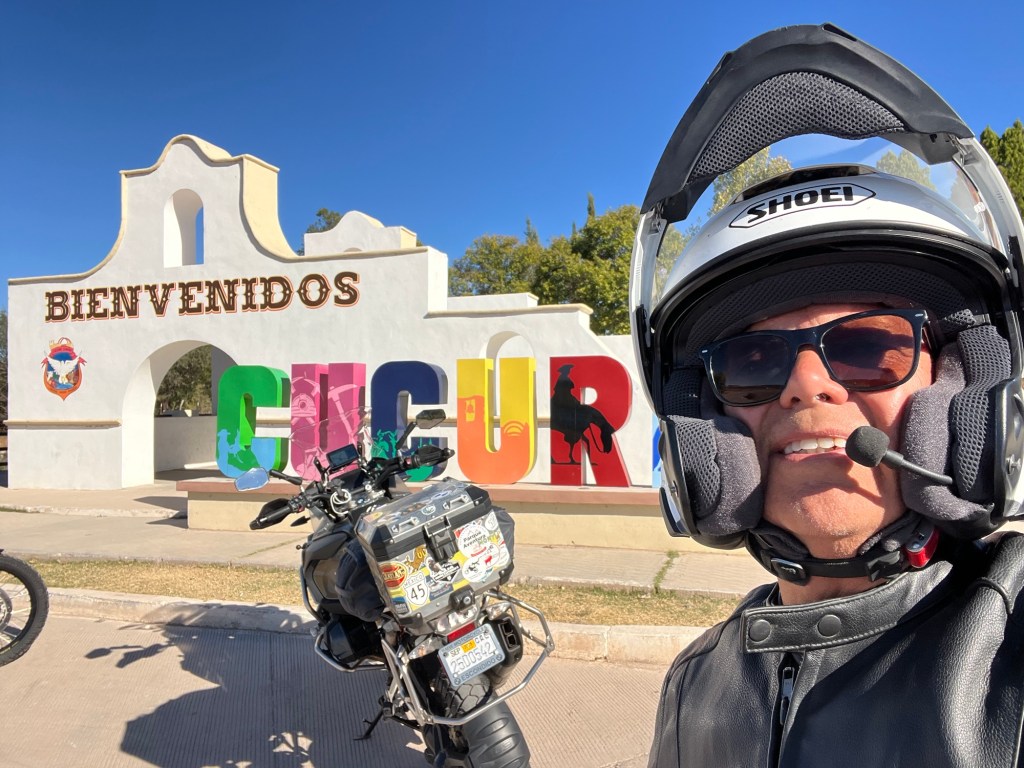
Three days into tearing down Baja’s Highway 1, my world was now only sun, asphalt, and the growl of our bikes. My 2020 BMW GSA, nicknamed Gordo for its 600-pound heft, cursed every pothole or rock beneath me. Joey’s KTM 790 zipped ahead, Roberto’s Honda 500 sliced clean lines, and Dwayne held steady, our pack of four carving through the peninsula’s stark beauty. Other riders trailed behind, their dust clouds lost in the far off distance. To say that they couldn’t keep up is now probably an understatement. This 213-mile haul from Santa Rosalia to Ciudad Constitución felt like a pact with the road itself—a pact that, at 65 and retired, I’d earned the right to make.
Past a lone cardón cactus, Joey’s hand suddenly shot up. A Ford minivan sagged on a treacherous bend, its rear tire a shredded mess. Could not have picked a worse spot if he tried—cliff on one side, nowhere to pull over. A Mexican family stood by: Javier, a short brown-skinned guy with a wide grin, his wife, Marisol, corralling two kids—Sofia, maybe eight, clutching a growling chihuahua showing teeth, and little Diego, about five.
Javier’s calm was uncanny, like he’d faced worse in Baja’s nowhere. Joey, (no hablo espanol) who with his nose for strays, pulled his KTM close, kicking up dust as he slid to a stop and became these people’s only hope. This is a major thoroughfare and cars and trucks continue speeding by. The rest of our pack swerved, brakes hissing on the curve’s edge—no guardrail, just a dizzying drop and so, after assessing the situation, we also just kept going.
My heart thumped as I leaned Gordo hard to stay upright. Roberto spun his Honda 500 back to help, while Dwayne and I rolled on, our bulky bikes too much for that tight spot.
At a roadside taqueria much later on in the town of Loreto, over tacos and margaritas, Joey and Roberto finally spilled the entire tale. Javier’s spare was a tire—no rim. He carried extra fuel like a Baja MacGyver, but no mounted spare tire and bo tools to change it. Now who does that?
Marisol offered homemade horchata from their cooler, her smile warm as she kept the kids safe from darting onto the road. Joey, grinning like a mad scientist, recalled a YouTube stunt: pour gasoline onto the tire, light it to seal the bead.
So, he tried it—or so he claimed. The tire flared, flames licking the minivan, engulfing it in a desert fireball. Javier and Marisol scrambled back for safety, Sofia shrieking. Oh well, we at least tried to help them.
We stared at Joey, jaws dropped, until he slowly began cracking up. “Kidding, you idiots!” he roared. They’d removed the old tire and mounted the new one by using six motorcycle tire irons and a whole lot of cursing and swearing. The kids now know a few more words in English.
Javier pitching in with steady hands. The family rolled off, Marisol waving, Diego tossing a thumbs-up. Joey, flush with road karma, bought our lunch. “To tall tales,” he toasted, and we clinked glasses, the Sea of Cortez winking beyond.
As a retired guy, these moments hit different. The road’s not just a path—it’s a mirror. Watching Javier’s family, I saw my own years reflected: the hustle to keep it together, the quiet strength in a crisis, the joy in small victories like Diego’s grin.
Retirement’s freed me to chase these roads, but it’s also taught me to savor the pauses—the tacos, the stories, the fleeting bonds with strangers. Baja strips life to its bones, and at my age, that clarity’s a gift.
Baja’s landscape kept us hooked. The desert eased into scrubland, dotted with boojum trees—spiky cirios that could’ve wandered from a Dr. Seuss book. I half-expected a T-Rex to crash the party, but the real chaos came when a pack of scrappy dogs—eight, maybe ten—chased Gordo. Their barks hit like gunfire, and I gunned it, wobbling over dirt. “I’m not your lunch, amigos!” I muttered, picturing a mutt on my backseat. They faded back, trotting in my dust, as I rolled into Coco’s Corner, legs now felt like jelly. An old man I am not!
Coco’s Corner, a 37-year legend etched into Baja’s dusty soul, was our holy grail. Back in 1987, Jorge Enrique “Coco” Corral Sandez—a larger-than-life Ensenada transplant who’d ditched city lights for desert solitude—carved out this ramshackle oasis south of San Felipe off old Highway 5.
What started as a shack amid cacti and boojum trees became a pilgrimage site for Baja 1000 racers and wanderers. Coco, now wheelchair-bound from diabetes but sharp with irreverent humor, served cold sodas and beers, collected bras and more, stapled to the roof like trophies, and traded road intel via guestbook maps. He was Baja’s unofficial archivist, his outpost a checkpoint of stories where dust-caked riders signed in and staggered out renewed.
The new highway rerouted traffic, forcing a 2021 move to “Nuevo Coco’s Corner,” a sturdier setup that traded gritty charm for accessibility. Coco passed in 2022, but his family keeps the flame alive, walls plastered with stickers and signatures, the air thick with his spirit. We pulled up to this evolved icon, and though the old shack’s edge was softer, the yarns flowed freer than ever. I slumped into a chair, spinning my dog-chase saga. “Get a lighter bike, Ralph,” Joey smirked. Gordo ruled highways, but Baja’s dirt craved agility like Roberto’s Honda 500. I love my bike. We have totally bonded over the years and I now can confidently ride it on most any road surface.
Coco’s legacy got me thinking. At my age, you start measuring life not in years but in moments—dusty stops like this, where stories outlive the teller.
Retirement’s given me the time to chase these places, but Coco’s Corner reminded me of the why: the road’s a teacher, and I’m still a student, gray hair and all.
The ride was Baja’s heart laid bare: highways snaking between the Pacific’s wild waves and the Sea of Cortez’s glassy calm. Islands floated offshore, cacti sharp under a sky so clear it stung. The air was fresh, save for the odd whiff of burning trash—Monday’s ritual, apparently. Volcanic rocks framed the road, whispering of a Mexico time forgot.
Santa Rosalia’s Hotel Industrial was a bust. Tied to the town’s ancient copper mine, it smelled of musty socks and trapped miners. I half-expected a ghost to rattle the walls.
Baja’s magic lived elsewhere—in open-air taquerias, cheap beers, bright colors, and locals who greeted us like family. Over menudo, phở’s tripe-heavy cousin, I swatted flies and dodged bees buzzing Gordo. Just another Baja day.
I met eight riders from Morelos, bikes loaded for the long haul, joining Chihuahuans and Michoacános I’d met earlier. Their grins mirrored ours, proof that two wheels and a horizon need no translation. Their inexperience in riding Baja made me smile—once, I was them, chasing speed. Now, I chase meaning, and Baja delivers.
Nearing Ciudad Constitución, I chased better left-side leans, watching Joey and Roberto carve turns like their tires were glued down—Roberto’s Honda 500 a blur of finesse. They’d pull away, but I’d catch them on the straights. I’d never match their skill, but each curve felt smoother, each mile a quiet win.
Baja was teaching me—to ride sharper, breathe deeper, savor road brothers. As a retiree, those lessons land harder; the road’s not just a thrill but a reminder to stay alive in every sense.
As the sun sank, painting the sky in fire and gold, I thought of Dr. Seuss: “Sometimes I think progress progresses too fast!”
Out here, with the wind in my face and the desert endless, time slowed. Baja wasn’t just a ride—it was a state of mind.
Ralph
Aka: Trawlercat
September 25, 2025

 Trawlercat Chronicles